






You Couldn't Hold Her
A sourceless light in the well
I would like to thank you for your detailed note taking. Though I knew the trail led to the Philippines, there were many potential sites which you narrowed down quite helpfully.
I knew I had the right one when I found your team already there. How irritating.
***
Taal. The lake sits in the remains of a much older volcano. The island in the middle has its own crater. From the ridge at Tagaytay you can see all three layers at once: the water, the cone, the farms running down to the shore.
People actually choose to live on rumbling land overlooking the flooded ruins of their predecessors. Mystifying.
In 1754 the volcano erupted for seven months straight. Lava, rocks and half a meter of ash covered the region, but one town, southwest of the caldera, survived. Caysasay, protected by the Virgin Mary, so the people believe.
The original image appeared in 1603, pulled from the Pansipit River by a fisherman. They brought it to the church, but it returned to the water. This happened enough times that they built the shrine where it wanted to be. Since then, pilgrims report seeing apparitions of the Blessed Mother near the spring.
***
And this shrine is where I found your people, manning a cordon and turning pilgrims (and international women of mystery) away, with a story about water quality testing. I loitered beside a vendor of saints and rosaries and small plastic Virgins, watching them work through gaps in the crowd.
They were efficient. In under two hours, the item was bagged, photographed and carried out. You will read their report with satisfaction.
I bought a rosary from the vendor as they passed.
***
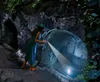
By midnight, the shrine was deserted. A light glinted off the water, the moon’s reflection, though it was cloudy then.
The item you took. It was back. She was back. I entered the well.
We spoke for a long time. Purchasing the rosary had been fortuitous. She had wanted to see it.
***
The trail has never been so clear. Follow close or you’ll lose me.
— N.

In 1611, a servant girl named Juana Tangui, nearly blind, witnessed an apparition of the Virgin Mary at the spring — the figure reflected in the water, flanked by candles, surrounded by kingfisher birds known locally as casaycasay. Her sight was restored. The spring was named Balon ng Santa Lucia. The site’s name derives from the birds.