







You Paid a Fortune for the Wrong Box
A mix-up in Okinawa
I see our sources overlap. You heard of the same auction I did, and sent a representative. I too brought assistance. Alipore makes people take to me, even more than my usual charms. So it came with me, and the ten others stayed behind. There is more room in my bag now.
***
Okinawa was its own kingdom for four hundred and fifty years, paying tribute to both China and Japan without ever fully belonging to either. Its priesthood was women only. Every village shrine had its noro, a hereditary post passed mother to daughter. The kingdom’s highest priestess was the kikoe-ōgimi. Formally the spiritual equal of the king and by the old doctrine of onarigami his actual protector.
Japan annexed the kingdom in 1879 and made it a prefecture. The priestesshood survived, shrinking village by village into households that kept their gods, privately.
Your organization had twenty-seven years in which to document this. Riding the American empire from 1945 to 1972, you facilitated the forgetting. The records are public now.
***
The piece was a magatama set, comma-shaped beads on a cord, strung for rites no one living remembers. The line that kept it ended three years ago. No daughter, no niece, no apprentice. An old woman, and then a house with the lights off.
I traced it from your occupation ledger to a prefectural death record, and from there to the ihin seiri manifest, the paperwork a home generates when it is emptied after a death. The clearance company worked fast. Three months later the contents surfaced at a dealer exchange outside Naha, bundled into lots for a Saturday auction.
***
I found the dealer running the exchange and paid him in postwar Ryūkyū glass, bottle-green, thick with the bubbles you get from melting down whatever glass survived 1945. I had acquired three pieces the previous week for exactly this purpose, letting him believe that I deal in glass. It bought me access to the warehouse the night before the sale.
Two hundred lots waited inside. Cards labelled the noro estate, boxes of household junk, nothing itemized. Your files could tell you the estate was here. They couldn’t tell you where the beads were in it. Alipore ran warm down one aisle and cold down the next, and it sat up in my hand at a box labelled as garden tools and glass floats.
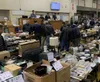
I was not alone in the warehouse. An auction worker proceeded down the rows with a printed list, checking lot cards against it, photographing each one. Every lot out of the noro’s house already had a phone bid registered against it, the whole estate spoken for, sight unseen, days before the hammer.
He finished his list and left. Competition, possibly better funded than I was.
Two lot cards traded places, the noro’s and a stranger’s.
***
The auction took under a minute for my lot. It sold, under the wrong lot number, to my proxy for five thousand yen. On the other end of a phone line, the entire estate with one imposter sold at a figure that made the auctioneer check the reserve twice before he read it aloud.
Careless of you to trust a manifest over observation. I’d tell you to come yourself next time, but I’ll enjoy the advantage while it lasts.
— N.

Akiya are vacant houses in Japan, associated with the country’s demographic decline and the depopulation of rural areas. The national population has fallen since around 2010, with the steepest losses in the countryside as residents age and younger generations move to cities. The 2023 Housing and Land Survey recorded approximately nine million vacant homes, about 13.8 percent of the housing stock, or roughly one in seven. Many are inherited properties that are left unoccupied rather than sold or demolished.