





Evil From the West
The painter behind the Batavia massacre
You keep making the same error. You insist on treating the pieces as mere objects to be obtained. They are not. Do you understand yet?
Here’s a hint. The next stop was south.
***
Fremantle. The Western Australia Shipwrecks Museum is on Cliff Street, in a building that used to be a commissariat store. Inside, you’ll find cannon, coins, a merchant’s seal, the reconstructed stern of a Dutch East India Company flagship that struck a reef in 1629 and stayed there. The cameo they were carrying as a diplomatic gift, intended for a foreign court. Personal effects of the massacred. All of it catalogued, labeled, behind glass.
Yes, massacred. It’s an interesting story.
***
Something evil had come from the West. I knew the “something” was more specific than the usual “colonialism”. It took weeks of research, but eventually I arrived at the Batavia.
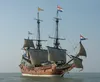
The ship struck Morning Reef in the Houtman Abrolhos, sixty kilometers off this coast, on the fourth of June 1629. The commander left in a longboat to fetch help from Batavia, the city the ship was named for, now Jakarta, a journey of thousands of miles. In his absence, a merchant named Jeronimus Cornelisz organized the murder of a hundred and twenty-five survivors. Men, women, children. The commander was gone for months.
Cornelisz had a theology for it, imported from the Netherlands, from the West. The Brethren of the Free Spirit, whose Dutch gatherings were run by a painter named Torrentius, held that the enlightened were beyond sin. He, naturally, considered himself such. Why shouldn’t he claim the treasure of the ship’s hold for himself, and kill anyone who either interfered or had no use?
When Pelsaert returned, he executed Cornelisz and the mutineers. Well, most of them.
***
The item from the West was not in the museum, or the wreck, or the graves. I found what I needed in the journal on display.
In November 1629, two of the condemned, a soldier named Wouter Loos and a cabin boy named Jan Pelgrom de Bye, were taken to the mainland and marooned. They were given a flat-bottomed boat, provisions, and an assortment of trade goods.
Pelsaert recorded the reason himself: in order to know, once for certain, what happens in the land.
They are considered the first Europeans to have lived on Australian soil. They were never seen again.
***
Guess where I’m headed next. My word, I’ve practically handed you this one on a silver platter. Try to keep up.
— N.

Johannes Torrentius (1589–1644), born Johannes Symonsz van der Beeck, was a Dutch painter. His sole surviving work, Emblematic Still Life with Flagon, Glass, Jug and Bridle (1614, Rijksmuseum, Amsterdam), which he claimed was made without human skill, contains a musical canon with a Rosicrucian inscription, ER+, standing for Eques Rosae Crucis, Knight of the Rose Cross. He was released from a twenty-year sentence after two years at the personal request of King Charles I of England, who brought him to court as a painter, though he produced no significant surviving work during that time.