







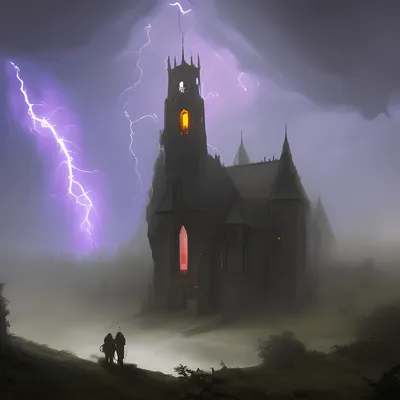
Malygris brooded for awhile, with his chin on his knotted hands. Then he arose, with a longunwonted celerity and sureness of movement that belied his wrinkles, and gathered together, from different coigns of the chamber, from ebony shelves, from caskets with locks of gold or brass or electrum, the sundry appurtenances that were needful for his magic. He drew on the floor the requisite circles, and standing within the centermost he lit the thuribles that contained the prescribed incense, and read aloud from a long narrow scroll of gray vellum the purple and vermilion runes of the ritual that summons the departed. The fumes of the censers, blue and white and violet, arose in thick clouds and speedily filled the room with ever-writhing interchanging columns, among which the sunlight disappeared and was succeeded by a wan unearthly glow, pale as the light of moons that ascend from Lethe. With preternatural slowness, with unhuman solemnity, the voice of the necromancer went on in a priest-like chant till the scroll was ended and the last echoes lessened and died out in hollow sepulchral vibrations. Then the colored vapors cleared away, as if the folds of a curtain had been drawn back. But the pale unearthly glow still filled the chamber, and between Malygris and the door where hung the unicorn’s head there stood the apparition of Nylissa, even as she had stood in the perished years, bending a little like a wind-blown flower, and smiling with the unmindful poignancy of youth. Fragile, pallid, and simply gowned, with anemone blossoms in her black hair, with eyes that held the new-born azure of vernal heavens, she was all that Malygris had remembered, and his sluggish heart was quickened with an old delightful fever as he looked upon her.

‘Are you Nylissa?’ he asked—‘the Nylissa whom I loved in the myrtle-shaded valley of Meros, in the golden-hearted days that have gone with all dead eons to the timeless gulf?’
‘Yes, I am Nylissa,’ Her voice was the simple and rippling silver of the voice that had echoed so long in his memory... But somehow, as he gazed and listened, there grew a tiny doubt—a doubt no less absurd than intolerable, but nevertheless insistent: was this altogether the same Nylissa he had known? Was there not some elusive change, too subtle to he named or defined, had time and the grave not taken something away—an innominable something that his magic had not wholly restored? Were the eyes as tender, was the black hair as lustrous, the form as slim and supple, as those of the girl he recalled? He could not be sure, and the growing doubt was succeeded by a leaden dismay, by a grim despondency that choked his heart as with ashes. His scrutiny became searching and exigent and cruel, and momently the phantom was less and less the perfect semblance of Nylissa, momently the lips and brow were less lovely, less subtle in their curves; the slender figure became thin, the tresses took on a common black and the neck an ordinary pallor. The soul of Malygris grew sick again with age and despair and the death of his evanescent hope. He could believe no longer in love or youth or beauty; and even the memory of these things was a dubitable mirage, a thing that might or might not have been. There was nothing left but shadow and grayness and dust, nothing but the empty dark and the cold, and a clutching weight of insufferable weariness, of immedicable anguish.