





J. Sharma, Private Investigations
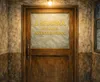
Saturday morning, I knocked twice on the frosted glass panel. Gold letters read J. SHARMA, PRIVATE INVESTIGATIONS. Jay's office was on the second floor above a chemist on Kelkar Road, and my left side was still aching from the stairs.
"It's open."
The voice was the same. Deeper maybe, rougher around the edges, but familiar.
I pushed through into a cramped space that might generously be called an office. Papers stacked on the desk, pinned to a corkboard on the wall. A ceiling fan turned lazily overhead, pushing warm air around. The window faced the street, afternoon traffic crawling past.
Jay stood up from behind his desk. He'd aged. More grey in his hair now, face more lined, a slight paunch straining against his kurta. But those eyes hadn't changed.
"Sharma-ji?"
"Arey baap re!" He blinked. "Krish!" He came around the desk. I extended my hand but he ignored it, pulled me into a hug instead. Strong arms, the smell of sandalwood soap. He held on a moment longer than casual. So did I. Then he stepped back. Four years since we'd spoken. I should have called sooner.
"Sit, sit." He gestured to a worn chair across from the desk. "I'll make chai."
I crossed the small office. Jay caught my irregular gait, and his expression darkened slightly. He'd been there that night. Without comment, he turned away, clearing papers from the chair.
"Sharma-ji, you don't have to..."
"Jay, bas." He moved to the electric kettle in the corner. "And I'm making chai. Discussion closed."
I lowered myself into the chair while he fussed with the kettle. I filled the silence by scanning the room. Papers everywhere, pinned and stacked and scattered. His desk looked like mine.
"No digital files?"
"When you're investigating the corporation that runs most of the city's infrastructure, it doesn't do to save your notes to the cloud."
Fair point. I turned my attention to the corkboard.
Photographs. Medical records. Obituaries. A map of Mumbai with coloured pins clustered around certain areas. My eyes caught familiar names in the headlines: mysterious illness, neurological complications, no known cause.
"You remember that time," Jay said glancing back, "when we staked out the Andheri counterfeit operation? Three nights in that van that smelled like fish. You complained the whole time."
I smiled despite myself. "The van really did smell like fish. And you snored."
"I don't snore."
"You absolutely snore."
"Lies only." But I could hear the grin in his voice. The kettle clicked off and he busied himself with cups, sugar, tea leaves. When he finally turned around with two steaming chais, the tension in his shoulders had eased.
He handed me a cup and settled into his own chair. "So. Why is official Mumbai Police suddenly interested in what a retired havaldar does in his free time?"
"I met Rajesh Patel at Malhotra General yesterday. He told me some families hired you to look into deaths at the hospital."
Jay's cup stopped halfway to his lips. "And?"
"Seven more deaths in the last two weeks. Same symptoms as your earlier cases, I'm guessing. Sudden neurological failure. No clear cause."
Jay set the cup down. "Seven? In two weeks? That's more than the previous cluster." He started pulling folders from a stack at his elbow. "Scattered cases going back two years, but never this concentrated." He spread papers across the desk, turning files towards me. "What do you know about Dr. Priya Iyer?"
The name landed differently now, after seeing her in the ward. After watching her with that teenage boy, gentle and patient. "Neurologist at Malhotra General. I interviewed people who'd been through her assessments."
"Most of the haemorrhage victims," Jay said, tapping a photograph of her from some academic conference, "cycled through what she calls mesh compatibility assessments. And she's the only doctor in that ward doing anything outside standard protocol."
"That term came up. What is it exactly?"
"That's the thing, Krish. It's not standard terminology. It's not in any medical literature I can find. She invented it." He pulled out another stack of papers, academic journals by the look of them. "Her early work was legitimate. PhD from IIT Mumbai, mesh antenna optimisation, neural plasticity enhancement. Solid research. Then seven, eight years back, her papers got..." He searched for the word. "Strange."
"Strange how?"
"Theoretical pieces about mesh networks supporting consciousness sharing. One called 'Distributed Consciousness: Mesh Networks as Extended Cognitive Substrates.' Another on collective neural processing, co-authored with some researcher named Vikram Sundaram." Jay made a dismissive gesture. "Her peers called it science fiction. Borderline transhumanist. And then Malhotra Foundation hired her."
"To do what?"
"Officially? She consults at Malhotra General on mesh disorders. But I pulled her equipment requisitions." He tapped another folder. "High-density EEG arrays. Custom mesh signal processors. Something called 'neural pattern mapping servers.' That's not standard diagnostic equipment."
"So she has strange theories. That doesn't explain how patients are dying."
Jay rubbed his face. "I know. Four months and I can't prove causation. Something is connecting them that I'm missing."
"The bloodwork showed elevated metals in all the victims, and rare earth elements that shouldn't be there."
Jay leaned forward. "I never had access to bloodwork as a private citizen." He pulled a notepad toward him. "Do they know how the metals got there?"
"That's the question. My partner thinks industrial contamination, Oberoi Pharmaceuticals. There's a factory in Parel that failed emissions testing, and a couple of victims worked there."
Jay wrote something down, frowning. "Worth looking into. But that doesn't explain why deaths cluster around hospital visitors only."
"I know." I hesitated. "There's something else. Something I've been seeing."
He waited.
"You know my antenna glitches."
Jay stilled. "Yes."
"When the mesh cuts out, I see something. On people's foreheads. A sheen."
"Where?"
I pointed. "Here. Like for bindi."
"And you're seeing this on..."
"Everyone who's received a blessing from the Bal Devi shrine at Malhotra General. Patients. Nurses. Visitors." I paused. "I saw one victim just after he died. He had it. People who haven't received tilak don't."
"And the other victims?"
"Not possible to check."
Jay was quiet. Then he stood and pulled a folder from a stack beneath the corkboard. He dropped it on the desk between us.
"This is the piece I couldn't make sense of. Financial documents. Corporate registrations. Funding routed through a dozen shell companies, but follow it far enough and you end up at Malhotra Foundation." He flipped through the pages. "They fund something called spiritual wellness initiatives. Donating equipment to temples, upgrading their infrastructure."
"Including the Bal Devi shrine at Malhotra General?"
"Including. All of it filed under an umbrella research programme." He pointed to a line item. "Human consciousness research."
"The blessings must leave something behind," I said slowly. "Something with those metals in it."
Jay sat back, processing. "Four months I've been chasing this, and I couldn't see the connection. I didn't have what you have."
"A glitchy antenna."
"A glitchy antenna." He almost smiled, then leaned forward. "And also subpoena powers, warrants. If we can get access to Iyer's research records, her equipment logs..."
"We?" I raised an eyebrow. "You're a source now, Jay."
"I'm a consultant." He waved a hand. "Unpaid. Pro bono."
"Then here's your first task. Make copies of everything you have and get them to me at the station." I stood. "I'll subpoena the hospital for Iyer's current research."
Jay's eyebrows rose, and he began stacking folders. "Look at you. Giving orders now."
I smiled and stepped toward the door. I was halfway there when he spoke again.
"Beta. Keep me posted, haan?"
I met his eyes, nodded, and left.