









FOR IMMEDIATE RELEASE
Pan-STARRS Observatory Discovers Potentially Spectacular New Comet
C/2026 P1 (Pan-STARRS) Could Become Visible to Naked Eye by Late 2027
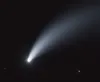
HALEAKALA, HAWAII – December 5, 2026 – Astronomers using the Panoramic Survey Telescope and Rapid Response System (Pan-STARRS) at Haleakala Observatory have discovered a new comet that may become visible to the naked eye later this year. The comet, designated C/2026 P1 (Pan-STARRS), was first detected on November 28, 2026, during routine observations of the outer solar system.
Dr. Elena Rodriguez, lead astronomer on the Pan-STARRS project at the University of Hawaii's Institute for Astronomy, made the initial discovery while analyzing automated survey data. "We noticed an unusual fuzzy object moving against the background stars in the constellation Lynx," Rodriguez explained. "Follow-up observations over several nights confirmed this was indeed a new comet with a developing coma and tail structure."
The comet is currently located approximately 4.2 astronomical units from the Sun (roughly 390 million miles), between the orbits of Mars and Jupiter. Preliminary orbital calculations indicate C/2025 P1 follows a highly elliptical path that will bring it closest to the Sun in late August 2026, at a distance of approximately 0.8 astronomical units – closer than Earth's orbit.
"This is an exceptionally exciting discovery," said Dr. James Chung, director of the Minor Planet Center at the Smithsonian Astrophysical Observatory, which officially catalogued the new comet. "Based on its current brightness and projected orbital path, C/2026 P1 has the potential to become one of the most spectacular comets visible from Earth in recent years."
Current photometric analysis suggests the comet's nucleus is estimated to be between 8-12 kilometers in diameter, making it significantly larger than many recently observed comets. Spectroscopic observations reveal a composition typical of long-period comets, with strong signatures of water ice, carbon monoxide, and various organic compounds sublimating from the nucleus as it approaches the Sun.
"What makes this comet particularly interesting is its retrograde orbit," noted Dr. Sarah Williams, a cometary dynamics specialist at NASA's Jet Propulsion Laboratory who assisted in the orbital determination. "C/2026 P1 is traveling in the opposite direction to the planets, which suggests it originates from the distant Oort Cloud – a spherical shell of icy objects that surrounds our solar system."
The comet's orbital period is calculated to be approximately 75,000 years, meaning its last visit to the inner solar system occurred during the late Pleistocene epoch, when early humans were developing sophisticated tools and cave art. This makes C/2026 P1 a pristine time capsule from the formation of our solar system 4.6 billion years ago.
Pan-STARRS, funded by NASA's Near Earth Object Observations Program and operated by the University of Hawaii, has been instrumental in discovering numerous asteroids and comets since beginning operations in 2010. The telescope system uses a 1.8-meter mirror and the world's largest digital camera to survey the entire accessible sky several times each month, identifying moving objects that could pose potential threats to Earth or offer scientific insights into our solar system's history.
"This discovery demonstrates the continued importance of wide-field survey programs," emphasized Dr. Rodriguez. "Pan-STARRS was designed primarily to detect potentially hazardous asteroids, but our comprehensive sky surveys regularly uncover fascinating objects like C/2026 P1 that expand our understanding of the solar system."
Professional and amateur astronomers worldwide are already tracking the comet's development. Current estimates suggest C/2026 P1 will reach magnitude 3-4 at its brightest, making it easily visible to the naked eye from dark sky locations. The comet should be observable throughout the late summer and early fall of 2027, with peak visibility occurring in September when it will appear in the pre-dawn sky.
"We encourage both professional astronomers and citizen scientists to observe this comet as it develops," said Dr. Chung. "Photographic and visual observations from observers around the world will help us better understand how C/2026 P1 evolves as it approaches the Sun and begins more vigorous outgassing."
The International Astronomical Union's Central Bureau for Astronomical Telegrams has issued official notification of the discovery, and observing ephemerides are being distributed to observatories worldwide. Major space agencies, including NASA, ESA, and JAXA, are evaluating potential opportunities for spacecraft observations as the comet approaches its perihelion.
Dr. Williams added, "Comets like C/2026 P1 provide unique opportunities to study pristine materials from the early solar system. As it approaches the Sun over the coming months, we'll be able to analyze gases and dust particles that have been frozen for billions of years, offering insights into the conditions present when our solar system formed."
The discovery was confirmed through observations at multiple facilities, including the Catalina Sky Survey in Arizona and the LINEAR program in New Mexico. International collaboration continues as observatories in Chile, Australia, and Europe contribute additional tracking data to refine the comet's orbital parameters.
Pan-STARRS will continue monitoring C/2026 P1 as it approaches its closest point to the Sun, providing valuable data about cometary behavior and composition. The observatory's automated detection systems process millions of astronomical observations monthly, maintaining Earth's vigilant watch for both potentially hazardous objects and scientifically valuable discoveries like this remarkable new comet.
###