






The Reddit Storm
Minnie Rearden stared at her moderator control panel, watching the post count climb past 50,000 as r/ProphetJohnFoster exploded into digital chaos. What had started as a small community of curious observers now hosted nearly 800,000 subscribers engaged in theological warfare that made her computer science degree feel utterly inadequate for the task at hand.
The three main factions had crystallized into distinct camps with their own tactics and rhetoric. The atheists, led by power users like u/ScienceOverSuperstition and u/RationalSkeptic2025, dismissed Foster as an elaborate hoax using Hollywood special effects and mass hypnosis. They flooded threads with links to debunking videos and demanded scientific peer review of every claimed miracle.
The true believers, organized around users like u/WitnessForChrist and u/ProphecyFulfilled, countered with scripture citations, testimonial accounts from attendees, and detailed theological analyses of Foster's biblical accuracy. They created massive threads documenting every fulfilled prophecy and supernatural event, treating doubt as spiritual blindness.
Most volatile were the skeptics attempting to apply scientific methodology to supernatural claims. Led by u/EvidenceBasedFaith and u/QuantumTheology, they demanded rigorous testing protocols while acknowledging the limitations of materialist frameworks when examining divine intervention.
"Another post removed for doxxing," Minnie muttered, clicking the ban hammer on a user trying to publish home addresses of Foster ministry staff. The volunteer moderator team had expanded to twelve people working around the clock, but they were barely containing the explosion of activity.
The fourth day's sermon had triggered unprecedented fury from two new demographics. Aging Boomers, many posting for the first time, flooded the subreddit with defensive screeds about their generation's achievements while younger users responded with devastating statistical analyses of generational wealth transfer and cultural decay.
Neoconservative users, previously absent from religious discussions, suddenly appeared in force defending American foreign policy and Israeli support. Their arguments clashed violently with isolationist Christians who embraced Foster's anti-war message, creating bitter threads about patriotism versus nationalism.
"Minnie, we're getting brigaded again," her co-moderator u/DigitalDeacon messaged privately. "The Ukraine War subreddit is organizing a mass downvote campaign."
She glanced at her screen showing 3,847 active users, 127 new posts in the last hour, and her modqueue backing up with reports faster than she could process them. The platform's algorithms couldn't handle organic growth this explosive, creating technical glitches that made moderation even more challenging.
"Just keep removing the threats and personal attacks," she replied. "Let them debate theology and politics, but no doxxing or violence."
The digital battle for John Foster's legitimacy was consuming Reddit's servers and challenging every assumption about online religious discourse in the social media age.
YouTube Chaos
The YouTube ecosystem had fractured into countless channels scrambling to capitalize on Prophet John Foster's viral phenomenon, creating a digital gold rush that overwhelmed both content creators and platform moderators attempting to maintain order.
Pro-Prophet channels dominated the trending algorithms, with "Foster Prophecy Analysis" garnering 3.2 million subscribers overnight as theologian Dr. Michael Harrison provided verse-by-verse biblical commentary on each sermon. "Miracle Monday" hosted by former megachurch pastor David Cheong broke down each supernatural event with eyewitness interviews and medical documentation, reaching 2.8 million followers.
Anti-Prophet channels weren't far behind in subscriber growth. "Debunking Foster" led by skeptical magician James Rogers earned 2.1 million subscribers by attempting to replicate Foster's alleged miracles using stage magic and special effects. "False Prophet Exposed" produced by atheist YouTuber Sarah Matthews accumulated 1.9 million followers through psychological analyses dismissing Foster as a cult leader exploiting religious desperation.
Hundreds of smaller channels emerged across every conceivable angle: "Foster Fashion Analysis" examined the prophet's clothing choices for hidden messages, "Stadium Acoustics Breakdown" analyzed audio quality for evidence of manipulation, "Biblical Greek with Foster" provided linguistic analysis of his scriptural interpretations, and "Meme Prophet" generated endless satirical content from both supporters and detractors.
The platform's Content ID system was buckling under the pressure of copyright claims, fair use disputes, and automated takedowns. Every Foster sermon clip triggered dozens of response videos, reaction channels, and commentary streams that blurred the lines between original content and derivative works.
Most problematic were the AI-generated deepfakes flooding the platform faster than human moderators could remove them. Sophisticated algorithms created convincing videos of John Foster endorsing political candidates, making contradictory theological statements, or appearing in inappropriate contexts designed to discredit his ministry.
"We're seeing over 10,000 Foster-related uploads per hour," YouTube's Trust and Safety team lead Michelle Parker announced during their emergency meeting. "Our AI detection systems can't distinguish between legitimate commentary and malicious deepfakes at this volume."
The technical challenge was unprecedented: how do you moderate religious content that generates passionate responses across theological, political, and cultural fault lines while maintaining platform neutrality and free speech principles?
"Focus on the deepfakes and direct threats," Parker instructed her team. "Let the theological debates continue, but remove anything that could incite real-world violence."
The digital battlefield for John Foster's prophetic legitimacy was reshaping online discourse about religion, politics, and truth itself in the social media age.
The Occult Conspiracy
Priestess Morgana adjusted her webcam in her candlelit ritual chamber, surrounded by thirteen covens participating in the emergency Zoom call that would determine their response to John Foster's devastating supernatural authority. The usual participants appeared in their darkened squares—High Priestess Luna from Austin, Warlock Shadowmoon from Houston, and various practitioners from across the Southwest—but tonight they were joined by an unexpected guest.
"Brothers and sisters of the craft," announced a distinguished man in an expensive suit whose background revealed nothing of his location. "I represent certain Masonic lodges that share your concern about the Foster situation. Our mutual interests require coordinated action."
Morgana recognized the type immediately—wealthy, powerful, connected to networks that operated behind mainstream politics and finance. The kind of men who used occult practices not from spiritual belief but for temporal control over lesser mortals.
"Our previous attempts to disrupt Foster's ministry through conventional means have failed," he continued with corporate efficiency. "Federal raids, media suppression, financial pressure—all ineffective against whatever protects this prophet. Therefore, we're implementing a spiritual solution that requires your participation."
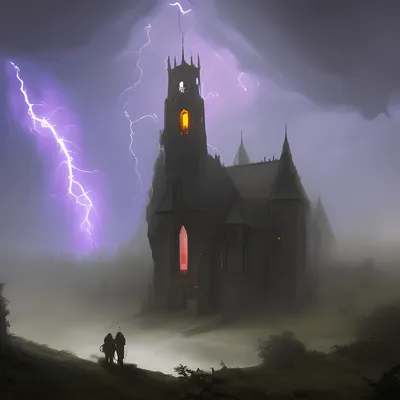
The sorcerer outlined plans for what he called "the largest coordinated working in modern times"—a massive ritual designed to generate and direct a catastrophic storm system directly at Robber Baron Stadium during Sunday's final service. Multiple lodges across the region would participate using methods he couldn't discuss on an open connection.
Morgana shuddered, understanding the implications. The most powerful spells required blood sacrifice, usually children whose life force could fuel supernatural workings beyond normal human capability. The Masonic lodges possessed resources and connections that made such sacrifices possible while maintaining plausible deniability.
"Your covens will provide supporting energy beginning at 11 PM Central Time Saturday night," he explained. "Detailed instructions will be distributed through your WitchWorker mailing list. Every practitioner must participate—this is all hands on deck."
The promise of rewards for success went unspoken but understood. Those who helped destroy God's prophet would receive advancement in the hidden hierarchies that controlled finance, media, politics, and culture. Failure, however, would bring consequences that made earthly persecution seem trivial.
"What guarantee do we have that this will succeed where everything else has failed?" asked High Priestess Luna, her skepticism evident despite the digital distortion.
The sorcerer's smile was cold and confident. "Foster's protection works against human enemies, but we're invoking powers that predate Christianity by millennia. The storm we're summoning will appear entirely natural to any investigation, while accomplishing what conventional forces cannot."
As the call ended with assignments distributed, Morgana felt both excitement and terror at participating in such a massive working. If successful, they would eliminate the greatest threat to their spiritual authority in generations. If it failed, the consequences from the forces they were challenging might be more terrible than anyone could imagine.
Media Desperation
White House Press Secretary Jennifer Ogden stared at her laptop screen showing sixteen media executives, news directors, and political consultants in what had become a daily crisis management call that felt more like a funeral wake for their collective influence.
"Our anti-Semitism narrative has completely collapsed," complained CNN's executive vice president David Chambers, his exhaustion evident through the video compression. "Every time we run segments about Foster's dangerous rhetoric, social media explodes with support. Generation Z users are literally saying 'You say anti-Semitic, we say anti-Satanic' and getting millions of likes."
MSNBC's senior producer Sarah Williams nodded grimly from her square. "The racism angle is equally dead. When we call Foster supporters racist, young people respond with 'Thanks for noticing' and start posting crime statistics we can't debunk. Our usual tactics are backfiring spectacularly."
The generational divide had blindsided established media operations built on shame-based narrative control. Younger audiences, raised on internet culture that celebrated transgressive humor and rejected institutional authority, found mainstream media's moral hectoring more amusing than persuasive.
"What about the Ukraine angle?" asked the Washington Post's political editor Michael Rodriguez. "Foster's anti-war message is undermining bipartisan support for defense spending."
New York Times senior correspondent Patricia Davis shook her head. "That's making it worse. Every time we defend the war, his supporters flood the comments with casualty numbers and budget figures. They're more informed about the conflict than our own reporters."
The Israeli situation posed even greater challenges. Foster's condemnation of American support for Gaza operations had energized anti-war sentiment across religious and political lines, making traditional pro-Israel talking points seem callous rather than principled.
"Nobody wants to say it, but we're losing the narrative war," admitted NBC's Washington bureau chief Robert Park. "Foster's sermons are reaching far more people than our prime time shows, and his message is sticking because it explains things people can see with their own eyes."
Press Secretary Ogden felt the weight of an administration whose entire media strategy was crumbling in real time. "What do you recommend? We can't just ignore him—the livestreams are breaking viewership records."
The uncomfortable silence stretched as media professionals who had shaped public opinion for decades confronted their impotence against a prophet whose authority came from sources beyond their influence or understanding.
"Maybe we should consider a different approach," suggested Fox News political director Angela Thompson hesitantly. "If we can't discredit his message, perhaps we could co-opt elements of it, redirect the energy toward safer targets."
The desperate suggestion revealed how completely Foster had disrupted their information ecosystem. The call ended without consensus, leaving each participant to grapple with the terrifying possibility that their era of narrative control was ending not through political defeat but through divine intervention that rendered their techniques obsolete.