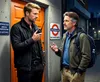








Albert Conner waited patiently just inside the service door, checking his watch as the hands approached 2 AM while listening for approaching footsteps in the pre-dawn London silence. His fluorescent safety vest hung loose over civilian clothes, the familiar uniform providing both camouflage and legitimate explanation for his presence in restricted Underground areas during maintenance hours when few questions would be asked about authorized personnel.
The working-class father felt profound satisfaction about repaying the debt he owed to John Foster, the American prophet whose supernatural intervention had rescued his fourteen-year-old daughter Darla from human traffickers when British authorities had abandoned her to organized predators. No risk was too great to ensure safe passage for the man who had delivered divine justice where earthly law enforcement had failed through cowardice and political correctness.
Albert's intimate knowledge of London Underground's service infrastructure made him uniquely qualified to provide clandestine transportation through the extensive tunnel network that connected every corner of the metropolitan area. Twenty-three years maintaining the Tube system had given him access codes, security protocols, and route knowledge that could circumvent governmental surveillance while moving the ministry team safely beyond assassination attempts.
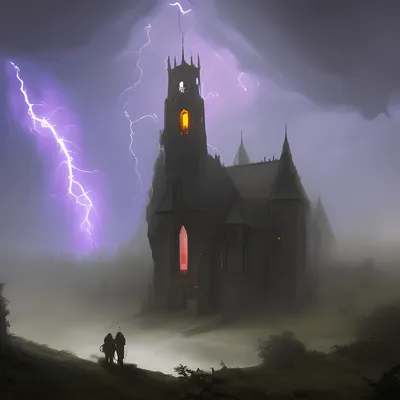
The fire barrier was still burning around Wembley Stadium, though Albert could not see the venue directly from his position near the service entrance. The supernatural flames' reflection off the cloudy night sky created an orange glow that reminded him of divine protection extending over God's chosen prophet, the same power that had incinerated Darla's captors while leaving her unharmed during their miraculous rescue.
Albert's radio crackled softly with routine maintenance communications as skeleton crews performed essential overnight work throughout the Underground network. His position as senior maintenance supervisor provided legitimate cover for unusual activities, with other workers assuming his movements related to emergency repairs or equipment inspections that regularly occurred during reduced service hours.
At last, Albert saw a man in security guard uniform approach the door with purposeful stride that suggested military training rather than civilian background. The figure's bearing and movement patterns matched descriptions Davies had provided during their coordination calls, confirming the arrival of Foster's protection team despite the dangerous circumstances surrounding their departure.
Albert opened the door quietly, recognizing Davies immediately as the former SAS soldier whose tactical expertise had enabled their escape planning. The professional warrior nodded acknowledgment before waving the ministry team forward from concealed positions where they had waited while Davies confirmed the meeting location remained secure.
After the team entered through the service doorway, Albert secured the entrance and led them down a series of narrow and steep stairs that provided maintenance access to Underground tunnels far below street level. The concrete steps echoed softly with multiple footsteps as nine people descended into London's subterranean transportation network, their breathing labored from the physical exertion of rapid stair descent.
At the bottom of the stairs, Albert motioned for the team to wait while he performed essential security checks that would ensure their clandestine movement remained undetected by transportation authorities or governmental surveillance systems. He unlocked a heavy metal door with a key from the ring on his belt, disappearing into the tunnel system for reconnaissance that would confirm their planned route remained viable.
Several tense minutes passed while Albert verified that no security patrols or maintenance crews were operating in their intended pathway, checking both electronic monitoring systems and physical surveillance to guarantee safe passage. His radio remained silent except for routine communications from other Underground sectors, suggesting their section was clear of official activity.
When Albert returned, he provided the team with brief but essential instructions to follow his path exactly without deviation, emphasizing that his route had been carefully planned to avoid security cameras positioned throughout the Underground network. Any unauthorized presence in restricted areas would trigger automated alerts that could compromise their escape while exposing Albert's assistance to governmental retaliation.
They followed him into Wembley Park station through service corridors that bypassed public areas where late-night surveillance might detect unauthorized personnel. Albert's confident navigation through the maze of maintenance passages demonstrated decades of professional familiarity with Underground infrastructure that most London residents never suspected existed beneath their feet.
In the station, they encountered a train with a single carriage displaying red and yellow striping that Albert explained was called a "special service train"—maintenance vehicles used for equipment transportation and emergency response that operated outside normal passenger schedules. The specialized rolling stock provided perfect cover for their clandestine journey through London's tunnel network.
They walked along the platform against the wall, staying close to structural elements that would minimize their visibility to any remaining security cameras while approaching their transportation. Albert's positioning demonstrated professional understanding of surveillance blind spots that allowed authorized maintenance personnel to move without constant monitoring.
Albert stopped the group opposite the waiting train, producing his maintenance radio to coordinate with Underground control systems that would enable their departure without triggering security alerts. His brief communication employed technical codes that confirmed legitimate maintenance operations requiring special service vehicle deployment during overnight hours.
The radio conversation concluded with acknowledgment from central control, prompting Albert's satisfied nod as their transportation received official authorization despite its unconventional passenger manifest. He approached the carriage and pulled open the heavy door, revealing an interior designed for equipment rather than passenger comfort.
They entered to find the space empty of seats but equipped with hand rails that would provide stability during transit through London's extensive Underground network. The utilitarian interior felt cramped with nine adults, yet Albert's expression showed confidence that their journey would proceed without incident despite the improvised passenger accommodation.
Albert secured the door and the train started moving with mechanical precision that demonstrated Underground engineering excellence despite the aging infrastructure. The electric motors hummed quietly as they began their journey through tunnels that connected Wembley Park to central London via the Jubilee line route that Albert had selected for optimal security and minimal exposure.
The train operated more slowly than normal passenger service, allowing Albert to monitor their progress while ensuring equipment limitations weren't exceeded by the unusual deployment. The reduced speed provided additional safety margin while extending journey time that gave the tired ministry team opportunity to rest during their escape from hostile London authorities.
Albert watched through small windows as they passed several well-known stations that marked their progress toward central London: Kingsbury, Queensbury, and Green Park among familiar stops that most passengers saw only as platform announcements rather than the complex engineering marvels Albert appreciated through professional understanding of Underground operations.
Their journey concluded after thirty minutes at Westminster station, where Albert had arranged final transportation that would complete their escape from governmental surveillance. The iconic location provided both symbolic appropriateness and practical advantages for their departure from a nation whose Parliament had become hostile to divine truth.
The train stopped smoothly at Westminster platform, allowing Albert to open the carriage door as they prepared for the final phase of their escape plan. They exited onto empty platforms where reduced overnight service provided cover for their unauthorized presence while Albert led them toward another service exit that would complete their Underground passage.
Albert unlocked the service door and guided them up narrow stairs toward street level, his keyring providing access to restricted areas throughout Westminster Underground complex. Davies exited first to conduct tactical reconnaissance that would verify their final approach remained secure from hostile surveillance or assassination teams.
Davies returned after confirming their route was clear, leading the team a short distance to Westminster Pier where a small water taxi waited to complete their escape from London. The Thames provided final transportation beyond governmental control while offering flexible destination options that conventional ground routes couldn't match.
At Westminster Pier, Albert watched the ministry team board their water taxi, feeling profound satisfaction about successfully repaying his debt to John Foster through faithful service during their most dangerous hour. Davies and Albert shook the prophet's hand in farewell, understanding that this moment marked both completion of their mission and possible final contact with God's chosen messenger.
As the water taxi departed into Thames darkness, Albert felt peaceful completion about serving the man who had rescued his daughter when earthly authorities had failed, knowing that his Underground expertise had enabled divine protection to triumph over governmental assassination attempts through faithful cooperation between working-class solidarity and prophetic authority.