







John Foster stood in the stands of Wembley Stadium, watching Jackson Simeon's production crew complete final preparations for their London ministry as Monday afternoon faded into evening. The past eighteen hours had been a frenzy of activity as the British government struggled to respond to his unexpected arrival and the fire barrier that had made conventional law enforcement approaches impossible.
From his vantage point inside the protected perimeter, John observed the heavy police presence assembling beyond the flame wall—riot vans, mounted officers, and specialized units that suggested authorities expected significant civil unrest despite refusing to issue protest permits. The Metropolitan Police appeared torn between enforcing governmental directives and avoiding casualties that would result from confronting divine protection.
The British government's eventual capitulation had come after heated emergency sessions where officials recognized the impossibility of their position. Like their Texas counterparts, they had discovered that canceling his ministry events was meaningless when he possessed divine authority to proceed regardless of earthly permission. By Monday afternoon, Downing Street had quietly authorized the events while maintaining public silence about their policy reversal.
John felt satisfaction about governmental acquiescence, yet understood that official tolerance remained fragile and could shift rapidly if political pressures changed. The heavy police deployment suggested authorities were preparing for trouble while hoping his ministry would conclude without incidents that could justify stronger intervention.
Inside Wembley Stadium, his team had worked with characteristic efficiency to transform the venue into a sanctuary capable of accommodating British Christianity's hunger for authentic divine revelation. The band had completed sound checks and rehearsed their planned repertoire, while Jackson's technical crews had configured broadcasting equipment to reach every English-speaking device throughout the United Kingdom and Ireland.
The concrete barriers remained precisely positioned according to angelic specifications, creating the foundation for the divine protection that had enabled their ministry to operate despite governmental opposition in three countries. John regarded these simple construction materials as instruments of divine will, understanding that earthly barriers became heavenly defenses when blessed by the Almighty's power.
As evening approached, John returned to his RV to review his opening sermon and prepare spiritually for the week ahead. His message about Britain's apostasy and the need for national repentance would challenge every comfortable assumption about modern Christianity's compatibility with secular humanism and progressive social values.
Kneeling beside his narrow bed, John offered earnest prayer for divine guidance and protection throughout the London ministry. The spiritual opposition in Europe felt more intense than anything he had experienced in America or Brazil, suggesting that ancient principalities governing Western civilization were marshaling greater resistance against his prophetic calling.
"Lord Jesus Christ, grant me wisdom to deliver Your words faithfully to this nation that once carried Your Gospel to the ends of the earth," John prayed, feeling the weight of proclaiming divine judgment to the people whose ancestors had built the greatest Christian empire in human history.
Rising from his knees, John attempted to sleep but found rest elusive despite his exhaustion from international travel and intense preparation. His mind raced with anticipation about ministering to British souls while his spirit sensed the spiritual warfare intensifying around their protected sanctuary.
After lying awake for nearly an hour, John dressed and left his RV for what had become his customary evening walk along the fire barrier's perimeter. The supernatural flames provided spiritual comfort as he sought solace before beginning his most challenging ministry venue thus far.
At the eastern entrance, he paused to chat briefly with one of Jackson's security guards—a former SAS soldier named Davies whose military bearing and obvious faith had qualified him for ministry protection despite the unconventional nature of their operations. The conversation reminded John how God had assembled faithful servants from every background to support his prophetic mission.
"Everything seems quiet tonight, sir," Davies reported professionally. "No unusual activity beyond normal police surveillance. London's curiosity appears more respectful than hostile."
John felt prompted to extend his walk beyond the protected perimeter, trusting in the divine gift of invisibility that had enabled him to move undetected through hostile territory during previous ministry events. His supernatural ability to remain unseen by evil-hearted observers had provided both reconnaissance opportunities and personal spiritual refreshment during stressful circumstances.
"I'm going to take a walk on Wembley Hill Road," John informed Davies. "The Lord sometimes grants me solitude for prayer even in hostile territory."
Stepping through the fire barrier's harmless flames, John felt the familiar sensation of divine protection shifting from external flames to internal spiritual covering that made him effectively invisible to enemies while remaining visible to the faithful. The cool London air provided welcome relief from the intense spiritual atmosphere inside their protected compound.
Wembley Hill Road appeared mostly deserted at this late hour, with only occasional pedestrians and light vehicle traffic that paid him no attention despite his recognizable appearance. John appreciated these moments of anonymity that enabled normal human interaction without the overwhelming attention his prophetic ministry attracted.
His brisk walk provided physical exercise and spiritual meditation as he contemplated the week ahead and the challenges of ministering to a nation that had abandoned its Christian heritage for secular humanism and progressive social experimentation. Britain's transformation from Christian empire to post-Christian welfare state represented exactly the apostasy his ministry was commissioned to address.
After walking for nearly thirty minutes, John turned to return to Wembley Stadium, his spirit refreshed by prayer and exercise that had prepared him for the demanding week ahead. The sight of the supernatural fire burning around the stadium reminded him of divine protection that made his prophetic mission possible despite earthly opposition.
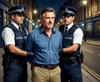
As he approached the main road intersection, a Metropolitan Police van suddenly pulled alongside the curb with aggressive urgency that immediately caught his attention. Two officers emerged rapidly, their movements suggesting arrest rather than routine patrol contact.
"John Foster, you're under arrest for violation of immigration law and conspiracy to commit public disorder," the lead constable announced while producing handcuffs with practiced efficiency.
John realized his supernatural invisibility had failed at this crucial moment, suggesting divine permission for his arrest despite the obvious complications it would create for their ministry. Before he could respond or attempt escape, cold metal closed around his wrists as the officers efficiently secured him for transport.
"You have the right to remain silent, but anything you say may be given in evidence," the second officer recited while guiding John toward the van's rear compartment. "You will be taken to a custody suite for processing and questioning."
The ten-minute ride to the police station passed in contemplative silence as John considered the spiritual implications of his arrest. Perhaps God intended this detention to serve His purposes, providing opportunities for witness that wouldn't otherwise exist or testing John's faith through temporary imprisonment.
At the custody suite, a sergeant processed his arrest with bureaucratic thoroughness that suggested routine handling of immigration violations. John's personal effects were catalogued and secured while his fingerprints and photographs were recorded for official systems that would alert higher authorities about capturing Europe's most wanted religious fugitive.
"Cell three," the custody sergeant directed, leading John down a corridor lined with heavy doors that muffled sounds from other detainees. "You'll have company—another guest of His Majesty who's been waiting for a morning court appearance."
The holding cell contained basic amenities—concrete bench, metal toilet, and fluorescent lighting that created harsh institutional atmosphere. John's cellmate sat hunched on the bench, his heavily built frame wrapped in tradesman's clothing while tears streamed down his weathered face.
The man looked up as John entered, his expression shifting from despair to shock as recognition dawned. Despite his emotional distress, the stranger immediately identified God's prophet and reacted with instinctive reverence that transcended their shared imprisonment.
"Dear God in heaven," the man whispered before sliding from the bench to kneel at John's feet with desperate supplication. "Please help me, sir. I don't know what else to do."
John gently took the man's hands and helped him return to the bench, his pastoral instincts responding to obvious spiritual need regardless of their circumstances. The encounter reminded him that divine appointments often occurred in unexpected places when God's servants remained available to minister wherever they found themselves.
"Please, sit with me," John said compassionately, settling beside the distressed stranger. "Tell me your name and what troubles you so deeply."
"Albert Conner, sir," the man replied through his tears, his voice carrying working-class London accent that spoke of honest labor and family responsibility. "I never thought I'd meet you face to face, especially not in a place like this."
John sensed that this unexpected encounter was divinely orchestrated, understanding that his arrest had positioned him to minister to a soul in desperate need of hope and divine mercy during their shared confinement in Metropolitan Police custody.