







Archbishop Marcel Allard adjusted his ordinary civilian clothing and settled deeper into his seat in the upper reaches of Stade de France, grateful for the anonymity that allowed him to observe John Foster's ministry without the protocols and expectations that would accompany his official presence. As the senior Catholic prelate for the Archdiocese of Paris, he felt obligated to witness firsthand the supernatural phenomena that had captivated France while triggering unprecedented governmental hostility.
The seventy-three-year-old archbishop had served the Church for five decades, ascending through diplomatic channels and theological scholarship that had prepared him for most ecclesiastical challenges, yet nothing in his experience provided framework for evaluating claims of prophetic resurrection and divine commission. Foster's ministry demanded personal assessment rather than relying on secondhand reports from subordinates or media coverage.
The stadium buzzed with nervous energy as eighty thousand French souls gathered despite governmental prohibition and military opposition that had dominated news coverage throughout the the day. Marcel observed the diverse crowd with pastoral eyes, recognizing genuine spiritual hunger among attendees who had risked official disapproval to hear what many believed was authentic divine revelation.
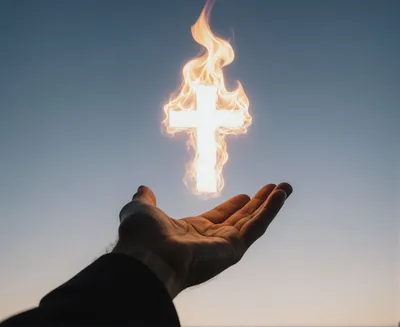
Outside the venue, the supernatural fire barrier burned exactly as documented in Dallas, São Paulo, and London—brilliant flames rising fifteen feet above concrete barriers while displaying the burning crosses that had become Foster's ministry signature. Marcel had studied video footage extensively, yet witnessing the divine fire firsthand created profound impact that transcended intellectual analysis.
The whole nation of France was in shock after viewing the video of John Foster taking control of the stadium using divine means against French military forces. Marcel had watched the footage countless times, studying Capitaine Rochefort's supernatural incineration and the soldiers' terrified flight from divine judgment that rendered conventional weapons useless against prophetic authority.
As senior theologian, Marcel understood the implications of such demonstrations extending far beyond political confrontation into fundamental questions about divine intervention in contemporary affairs. If Foster possessed authentic divine authority, then his words carried weight that transcended human opinion or ecclesiastical evaluation.
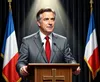
John Foster emerged onto the stage carrying his familiar leather portfolio, moving with measured dignity that suggested confidence rather than showmanship. Despite the massive stadium and international controversy surrounding his ministry, the American prophet appeared completely at ease, radiating supernatural authority that Marcel recognized as either genuine divine commissioning or the most sophisticated religious deception in Christian history.
When Foster began speaking, Marcel felt immediate shock at the linguistic perfection of his French delivery. The archbishop's extensive education and diplomatic experience had exposed him to French spoken by countless international figures, yet Foster's eloquence surpassed even native speakers of aristocratic background.
"We live in a fallen world," Foster proclaimed with majestic authority, "and we are ruled by servants of Satan."
The opening declaration resonated through the stadium with prophetic power that reminded Marcel of biblical accounts of ancient prophets delivering divine judgment to rebellious peoples. Foster's French carried not merely fluency but the sophisticated vocabulary and grammatical precision of classical education, as if he had been raised in the court of French nobility.
Marcel listened with growing amazement as Foster recounted recent events that had brought him to Paris despite European governmental opposition. The prophet's narrative combined political analysis with theological interpretation that presented earthly conflicts as spiritual warfare between divine authority and satanic rebellion.
"My ministry team and I were forced to flee Britain like criminals escaping justice," Foster explained with calm authority that transformed governmental hostility into religious persecution. "We left behind our equipment and personal possessions, pursued by government assassins who preferred murder to allowing God's word to reach French souls."
The archbishop recognized Foster's account as accurate based on intelligence reports that had reached Vatican diplomatic channels, yet the prophet's theological interpretation elevated political opposition into biblical persecution that echoed apostolic experiences with hostile governments throughout Church history.
Foster's exposition of European governmental coordination against his ministry provided devastating analysis of institutional opposition: "We found ourselves subject to Interpol warrants for fabricated criminal charges issued at the behest of the unelected and illegitimate European Commission, whose authority derives not from democratic mandate but from oligarchic conspiracy against Christian civilization."
Marcel appreciated Foster's precise constitutional analysis that exposed European Union governance as technocratic tyranny rather than democratic representation, yet the theological implications struck deeper than political commentary. If European institutions actively opposed divine ministry, then their legitimacy faced fundamental challenges that transcended electoral politics.
The prophet's account of rescuing his imprisoned staff through supernatural intervention provided concrete demonstration of divine power trumping earthly authority: "When French authorities arrested my faithful servants who had committed no crime beyond preparing venues for Christian worship, I went personally to their place of detention and demanded their release in the name of the Almighty."
Foster's description of manifesting divine fire in the police station while commanding immediate release of his personnel demonstrated prophetic authority that Marcel recognized as either authentic divine commissioning or blasphemous impersonation requiring immediate ecclesiastical condemnation.
"The French government responded to peaceful Christian ministry by deploying military forces to occupy our properly permitted venue," Foster continued with mounting prophetic indignation. "Armed soldiers positioned themselves to prevent French citizens from hearing God's word, treating religious expression as terrorist activity requiring military suppression."
The theological significance of governmental violence against Christian assembly resonated powerfully with Marcel's understanding of Church history, where civil authorities had repeatedly persecuted faithful believers through institutional power that opposed divine truth.
Foster's account of confronting Capitaine Rochefort provided the morning's most challenging moment for Marcel's theological evaluation: "When I asked the military commander whether he served God or His enemies, the man chose poorly and was instantly incinerated by divine judgment. Those soldiers who refused to submit to heaven's authority suffered an identical fate."
The supernatural execution of French military personnel struck Marcel as either prophetic demonstration of divine justice or demonic deception designed to promote violence against civil authority. The archbishop's evaluation required discerning between authentic divine intervention and satanic manipulation disguised as religious righteousness.
"From these events, we must conclude that the French government and the European Commission are agents of Satan," Foster declared with devastating theological finality. "Their consistent opposition to Christian truth, their persecution of faithful believers, and their preference for secular ideology over divine revelation mark them as servants of the enemy rather than legitimate civil authority deserving Christian obedience."
Marcel felt profound unease at Foster's categorical condemnation of European governmental institutions, recognizing the revolutionary implications of declaring civil authorities as satanic rather than merely misguided or corrupt. Such theological pronouncements historically preceded religious wars and political upheavals that cost millions of lives.
Foster's strategic announcement carried ominous implications for future ministry activities: "Going forward, this ministry will consider all nations of the European Union to be ruled by Satan, requiring stealth operations and careful use of heavenly powers to ensure our events proceed according to His divine command despite governmental opposition."
The prophet's declaration of spiritual warfare against European governments suggested systematic campaign rather than isolated religious expression, elevating his ministry from evangelistic outreach to prophetic resistance against institutional authority that Foster identified as fundamentally evil.
"All who attempt to prevent this ministry will find themselves subject to God's perfect justice," Foster warned with divine authority that brooked no compromise. "I hope European leaders will demonstrate wisdom by submitting to divine will, though I expect they will choose continued rebellion until judgment becomes unavoidable."
Marcel recognized Foster's ultimatum as either authentic prophetic warning or dangerous religious extremism that could justify violence against civil authorities throughout Europe. The theological evaluation required determining whether Foster spoke with divine authority or promoted rebellion disguised as religious duty.
Foster's conclusion connected contemporary persecution to apostolic precedent: "None of this should surprise faithful Christians, as Jesus Christ warned that His followers would be persecuted and hated for their devotion to God and His works. The world that crucified our Savior continues opposing those who proclaim His truth."
The biblical framework provided compelling context for governmental hostility, yet Marcel struggled with Foster's absolute condemnation of European institutions and his apparent willingness to use supernatural violence against civil authority.
As Foster continued his exposition, Marcel found himself torn between admiration for the prophet's courage and concern about the revolutionary implications of declaring European governments as satanic institutions deserving divine judgment rather than Christian reformation.
The archbishop left the stadium with more questions than answers, recognizing that Foster's supernatural demonstrations appeared authentic yet troubled by theological conclusions that could justify widespread violence against civil authority throughout Christendom.